By: Aleks Chan
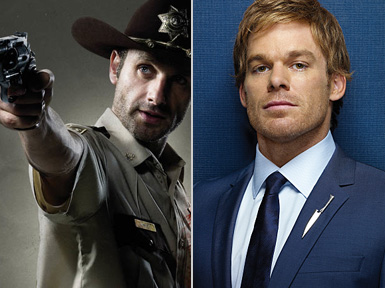
THE WALKING DEAD, set in the aftermath of a zombie apocalypse (and based on the popular comic book series by Robert Kirkman), is ambitious, haunting, cold, and occasionally slow. In the opening sequence, our hero, Rick Grimes (Andrew Lincoln), is foraging for gas amidst a field of abandoned cars when he is faced with a zombified child — what happens sets a powerfully grim tone for the rest of series. That scene is almost so manipulative as to be repulsive, but as the show rocks between freights and tedium in its first two-and-a-half hours, it still makes a convincing (if not yet entirely realized) case for itself as a gross-out survivalist zombie drama.
After suffering a gunshot wound in a dustup with some runaway crooks, Rick awakens in the hospital alone. Hobbling his way through the abandoned, disheveled building, he starts picking up on a few things: something has gone horribly, horribly wrong. The town abandoned, there are dismembered and sickly-looking bodies everywhere, and his first face-to-face encounter with a “walker” throws him (and us): a zombie woman’s torso, and only her torso, writhes across the ground towards him, chomping for his flesh.
His wife and son are missing, and according to a man and son team who’ve held themselves up in an abandoned house, they might be in Atlanta. Rick doesn’t ask a lot of questions, but we do learn this: a fatal fever outbreak leads to the dead rising again as monsters, the disease spread by infected wounds. Andrew Lincoln, a British actor probably best known to stateside viewers as the guy who swooned over Kiera Knightly in Love, Actually, effortlessly shakes off our frustrations with Rick, whose reticence would be maddening if he didn’t make him seem so scruffily wise but still worthy of our sympathy — he’s like an edgier Matt Damon.

 How does a man who has never been able to emotionally connect with anyone or anything deal with the brutal death of the one person who came closest to bringing out his humanity? And how is his seeming lack of humanity viewed by those around him, including the sister who has long struggled to understand his quirks? That was the intriguing premise behind the fifth-season premiere of DEXTER as our anti-hero struggled with the aftermath of wife Rita’s murder. Having Dexter’s disconnect from humanity be the very thing that makes him look like a prime suspect in Rita’s death was a stroke of genius, and the scene in which he broke news of her death to his stepchildren while wearing a pair of mouse ears from Disney World – aka the Happiest Place On Earth – beautifully displayed exactly the kind of dichotomy this series has specialized in from the beginning. If there was one flaw with the episode, it lay not in what transpired during the hour but in the spoiler-heavy preview of what’s to come this season. That said, having not flicked the TV off quickly enough to avoid seeing them, it looks as if we’re in for a hell of a ride over the next 13-weeks.
